Explore our top 15 art selections from the Art Paris fair, available on Artsper! Join us as we delve into the narrative behind each artwork and appreciate the craftsmanship and talent of the artists. Be sure to explore our exclusive online art collection featuring pieces showcased at Art Paris.
Pauline-Rose Dumas, a French multidisciplinary artist, specializes in textile design. Her unique exploration of forging and textiles blur traditional boundaries in contemporary art.
The blend of wrought iron and textiles creates a sharp contrast in color and essence. Wrought iron’s solid blackness defines shapes and directs focus, contrasting with the lightness, delicacy and translucence of the textiles. This interplay suggests a symbiotic relationship where the fragile textiles find balance and support in the strength of wrought iron, resulting in a harmonious artwork.
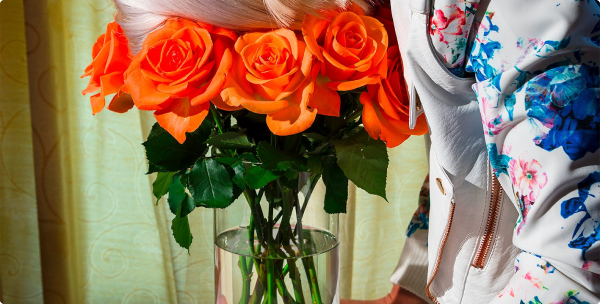
In this painting, the elderly woman’s attention is drawn to her hand, concealed by a cloth. The setting is intimate: she sits on a vibrant bed in her dressing gown, legs bare, inviting a quiet connection with the viewer through subtle gestures rather than overt emotions. The presence of flowers and the pink gown imbue the scene with a feminine charm.
Sebastian Riemer, a contemporary German artist, delves into the anatomy of images through his unique approach. He manipulates original images, often altering colors, or magnifying details, thus bridging historical and contemporary contexts.
The artwork VNGH is centered around transforming the colors of a renowned self-portrait by Van Gogh through photography. This photographic representation is a negative print, maintaining the original painting’s format while inverting its colors, imitating an x-ray process that reveals the painting’s full materiality. The selection of dark colors, including various shades of blue, purple, and black contrast with the sheer white of the eyes. This creates a profound sense of unease, contrasting with the delicacy of Van Gogh’s original work.
Johanna Seidel, a German visual artist based in Germany explores the nature of perceived realities, blending elements of mythology, dreams, and personal experiences into a poetic visual language.
The artwork Dreaming of Paris unravels the enigmatic connections to the city, within its subaquatic and ethereal landscape. The interplay of soft green and beige hues, accented by delicate touches of orange, create a watercolor-like effect that adds to its dreamlike quality. Symbols within the painting, such as descending clouds over greenish waters, arches directing attention and a garland with potential theatrical connotations, invite interpretation. The inclusion of three heads at the bottom deepens the mystery, possibly being references of the 18th century.
Jaume Plensa, a renowned artist born in Barcelona in 1955, has received numerous awards, including the Medaille de Chevalier des Arts et des Lettres from the French Ministry of Culture. His craft spans various mediums, with a particular focus on sculpture in public spaces.
Lou et son ombre encourages us to reflect on the concept of volume, as the faces look in multiple directions and mentally urge the viewer to visualize the totality of the head. The arrangement of different sizes of figures interlocked one inside the other could evoke life and evolution. Neither of the faces in the piece look straight at the viewer, and the two faces gazing to the left prompt us to consider the dynamic nature of facial movement.
Olivier Petiteau is an artist whose artworks reflect a deep exploration of reality through artistic expression. Having grown up amidst the sounds of factory machinery, he channels themes of emptiness and absence in his creations.
The artwork Manivelle is a study in color and geometric forms, characterized by precise lines that converge to create distinct shapes. Its aesthetic resonates with the early 20th-century art movement of cubism, reminiscent of the geometric explorations found in the artworks of Georges Braque and Fernand Léger.
Flore, a French-Spanish photographer is known for her refined and unconventional approach to photography. Flore’s work transcends traditional photography, blending ancient techniques with modern methods, often incorporating physical interventions on prints with materials like wax, gold, or pigments.
This photographyStill life mimics the appearance of a painted canvas, creating an intriguing visual illusion. The pale, subtle yellow and blue colors used are similar to a watercolor, and the light and dark blues in the background resemble water, with a sense of fluidity. The central focus of the piece draws our attention to the three lemons on a plate, and adds a sense of depth to the composition. The sparse background makes the viewer disoriented, as it is difficult to tell whether the plate is on a table, or if it is about to fall.
Xavier Veilhan, based in Paris, is known for his innovative approach across various mediums such as sculpture, painting, photography, and installations. Veilhan’s work combines classical representation with modern technological processes.
This olive-colored sculpture made from biosourced resin, features a figure in a reflective pose, which could lead viewers to reflect on man’s universality. This simplicity allows for diverse interpretations, offering a space to ponder themes of humanity without the distraction of facial expressions or other distinctive features.
Fabienne Verdier is a renowned contemporary French painter celebrated for her avant-garde techniques and dynamic approach to abstract art. Her unique method involves using large brushes with Indian ink suspended from above, a practice that demands physical engagement with the canvas.
This dark blue abstract artwork showcases swirling perfectly formed circular patterns resembling a hurricane, skillfully combining wild and abstract elements. This composition features bold dashes, circular forms, and flowing lines, inviting viewers to explore movement and energy within the painting.
Multimedia artist Leyla Cardenas, a rising star in the Colombian art scene, delves into the hidden narratives of human impact on landscapes. Her approach mirrors that of an archaeologist, revealing forgotten histories within neglected ruins and abandoned spaces.
Interfaz posible 2 represents a new series exploring the artist’s fascination with lichens and their symbiotic relationships with other organisms. This piece captures a moment of vibrant life that defies death and decay, symbolized by a contaminated river in Bogota. The photograph, printed on polyester silk using sublimation, showcases the resilience of lichens as they thrive on a concrete wall. The technique used: partially unweaving silk, reflects themes of time, erasure, and the enduring vitality of nature in the face of adversity.
Camille Brès, a French painter is known for her renewal of figurative painting among the younger generation of artists. Her art delves into intimate themes while also addressing societal issues such as feminism, the exploration of the psyche, and climate change.
This pastel artwork captures the essence of everyday life and personal connections in a vibrant and captivating style. By placing the “Hamilton Stark” book on the woman’s face, it creates a visual illusion, blending the book cover with her face. The white covers contrast with her surroundings and draw attention to the lady, emphasizing on the theme of identity explored in the book.
Mohamed Lekleti, originally from Taza, Morocco, is based in Montpellier, France. With a background in cinema and visual arts, Lekleti’s innovative approach has gained him recognition, including winning the Drawing Fair prize in Paris. Lekleti’s artistry involves deconstructing and reconstructing reality to challenge our perception.
The artwork Auprès de toi could evoke mythological themes, as it clearly diverges from reality through the use of mixed media techniques that provokes thought and elicit a subtle feeling of unease.
Lemoi Ning, born in Taiwan in 1981, embarked on a creative journey in 2021 that brought to life the endearing characters known as “MOI”. Lemoi’s artistic endeavors are rooted in the stories of her childhood home and the tales preserved in her memory.
This painting features accentuated outlines that immerse us in a dreamy realm. The figures’ eyes are represented by simple black dots, adding to the whimsical atmosphere. The imprecise colors and simplified shapes enhance the overall childlike essence, depicting playful interactions in a natural setting. The foreground cat mirrors the viewer’s role as an observer, contributing to a tranquil scene, along with a small child and serene stream. This interplay invites contemplation and evokes a nostalgic yet peaceful mood.
Fathi Hassan, born in Cairo in 1957 to Nubian and Egyptian parents, experienced displacement due to the Aswan High Dam’s construction in 1952. His artistic expressions often feature illegible texts that symbolize oral histories impacted by colonialism.
Samira is a vibrant tapestry-like painting, rich in colors and intricate patterns. The upper portion showcases bright hues like red, green, orange, patterns that resemble African motifs and Egyptian hieroglyphs. A prominent feature is a large flower encompassing smaller ones. Beige stripes divide the painting into two sections. The upper part is lively with colors, while the lower part introduces Arabic script and symbols like animals, trees, and vases, evoking nature. The inclusion of women’s heads and a large vase suggests craftsmanship and cultural heritage. The artwork could also explore themes of cultural division, notably represented by a woman separated by the beige stripes. This adds depth and invites viewers to reflect on identity and cultural complexities through symbolic elements and visual storytelling.
Ben rose to prominence in the late 1960s for his innovative “writings” across diverse mediums. His witty yet profound slogans challenge conventions and explore themes like ethnism, ego, and truth.
The artwork Rien d’impossible (“Nothing is impossible”) stands out with its distinctive white writing against a black background. Its design evokes memories of vintage school slates, with the childlike handwriting enhancing this nostalgic quality. The phrase suggests a message learned during childhood, serving as a reminder that in youth, all possibilities seem achievable. This optimistic statement encourages action and instills a sense of empowerment towards overcoming challenges.
We hope you enjoyed our favorite art pieces and gained insights into each artwork’s story! Don’t miss out on our exclusive online art collection of artworks at Art Paris.
Founded in 2013, Artsper is an online marketplace for contemporary art. Partnering with 1,800 professional art galleries around the world, it makes discovering and acquiring art accessible to all.